
Last Updated on 07/10/2026 by Daniel G. Taylor
Estimated reading time: 6 minutes
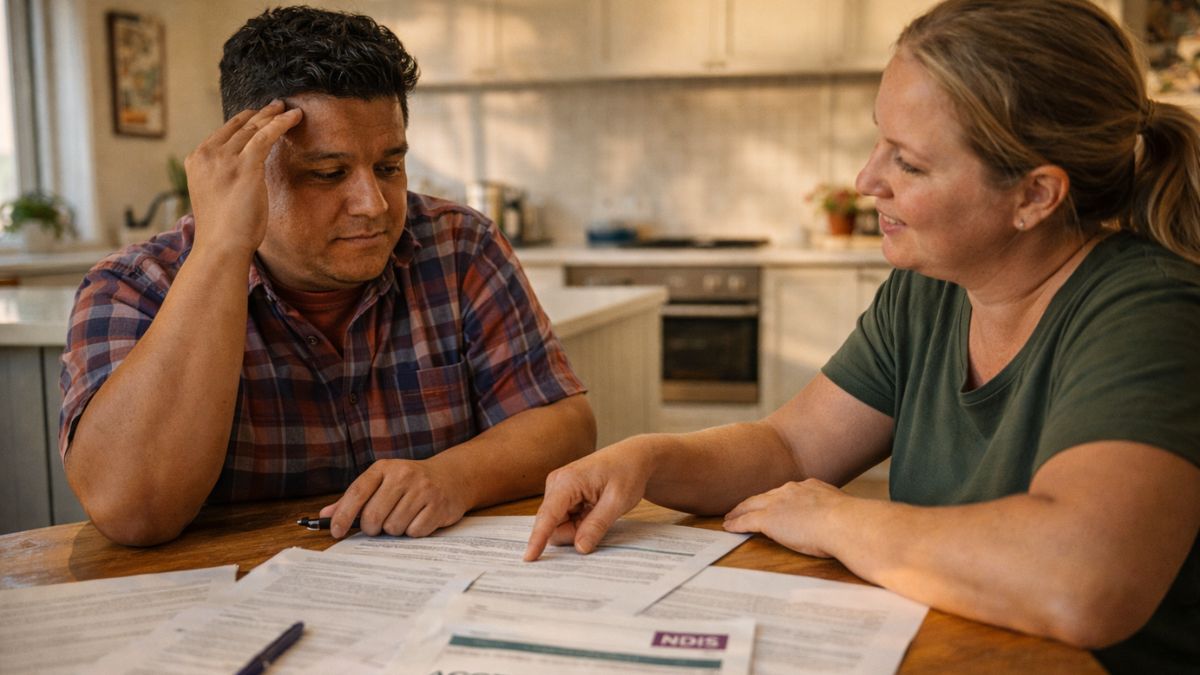
The paperwork alone can break you. If you’re searching for help with NDIS application, you are not alone—and you are not lost, even when it feels that way.
The Access Request Form is often the first real encounter people have with a system that speaks its own language. It can feel like you’re being asked to translate your life into bureaucratic code. But here’s what I want you to hold onto before we go any further: you are not a form. You are a person. And there are real, capable humans ready to walk this road with you.
Key Takeaways
- You are not alone in the NDIS application process; various supports are available to help you navigate it.
- Local Area Coordinators, Early Childhood Partners, and community advocacy organizations provide valuable assistance at no cost.
- Your medical team plays a critical role by providing necessary documentation for your application; engage them specifically for this purpose.
- Persistence, courage, and honesty are essential virtues to maintain during the application journey.
- You can seek assistance from family, friends, and advocates, and it’s important to know that a denial can be reviewed or appealed.
Table of Contents
Why You Don’t Have to Do This Alone
One of the most common things I hear from people at the beginning of this journey is: “I didn’t know I could ask for help with NDIS application.”
You can. In fact, it’s expected.
The NDIS was designed with support built into the access process. That means there are people whose entire job is to help you navigate it—at no cost to you.
Here’s where to start:
- Local Area Coordinators (LACs). LACs are funded by the NDIA to help people understand the NDIS and prepare their applications. They are one of the most valuable—and most underused—resources available.
- Early Childhood Partners. If you’re applying for a child under 9, Early Childhood Partners provide specialised support through this process.
- The NDIA Contact Centre. Sometimes you just need to speak to someone. Call 1800 800 110 to get direct answers to your questions.
You don’t need to walk in knowing everything. That’s precisely why these supports exist.
Community Advocacy: Another Place to Find Help with NDIS Application

Beyond government-funded supports, your community holds more resources than you might realise.
Disability advocacy organisations offer independent, participant-centred support. They’re not aligned with the NDIA—their job is to represent you.
Consider reaching out to:
- Disability advocacy groups in your state or territory (search the Disability Advocacy Finder)
- Community health centres, which often have social workers familiar with NDIS processes
- Carer Gateway, if you’re a family member or carer supporting someone through the process
- Online communities, such as NDIS participant Facebook groups, where lived experience is generously shared
Additionally, many charitable organisations run information sessions and drop-in clinics specifically for people seeking help with NDIS application. A quick call to your local council can point you toward what’s available in your area.
Your GP and Specialists: Underestimated Allies
Here’s something that catches many applicants off guard: your medical team plays a critical role in your application.
The NDIS requires evidence that your disability is permanent and significant. Without strong supporting documentation, applications are frequently delayed—or denied.
So how do you get the most from your medical professionals?
- Book a dedicated appointment to discuss your NDIS application specifically. Don’t try to squeeze it into a routine visit.
- Ask your GP to write a supporting letter that speaks to the functional impact of your condition—not just the diagnosis.
- Request reports from specialists, occupational therapists, physiotherapists, or psychologists who know your situation well.
- Be honest and specific. Describe your worst days, not your best. The NDIS needs to understand what life actually looks like for you.
Your vulnerability in that conversation is not weakness. It’s the evidence that gets you funded.
The Mindset That Gets You Through
This section isn’t about forms or phone numbers. It’s about you.
Navigating the disability system can feel, at times, like it’s trying to define you. You fill in a box. You become a category. Suddenly, the word “participant” starts appearing everywhere—as though it’s your new identity.
It’s not.
“Participant” is a funding label — a term the system uses to allocate resources against a definition of disability that says nothing about who you are. It’s a tool the system uses to allocate resources. But the person holding the pen—or clicking the submit button—is still the architect of their own life.
Therefore, what actually gets people through this process isn’t always the right form or the perfect support worker. Often, it’s three virtues:
- Persistence. The process is slow. Expect delays, follow up without apology, and keep going.
- Courage. Asking for help, disclosing personal information, and advocating for yourself takes real bravery.
- Honesty. With yourself, and with the system. The NDIS cannot fund what it cannot see.
These are not small things. Consequently, I’d ask you to acknowledge them in yourself as you go through this process—because the people who succeed aren’t always the ones with the most complex paperwork. They’re the ones who refuse to give up.
Frequently Asked Questions
The NDIS does not fund support workers to help you apply—but LACs and Early Childhood Partners provide free assistance as part of their government-funded role. Disability advocacy services are also generally free.
Absolutely. You can nominate a representative to communicate with the NDIA on your behalf. Many families navigate this process together, and having someone who knows you well in your corner is a genuine advantage.
A denial is not the end. You have the right to request an internal review of the NDIA’s decision. If you’re still unsatisfied, you can escalate to the Administrative Review Tribunal (ART). A disability advocate can support you through either process at no cost.
The NDIA aims to make an access decision within 21 days of receiving a complete application. However, gathering supporting evidence often takes longer. Starting that process early makes a significant difference.
Not necessarily. The NDIS assesses functional impact, not diagnosis alone. Nevertheless, medical evidence is still important. If your diagnosis is old, an updated report from your treating professional can strengthen your evidence. Speak with your GP about what documentation best reflects your situation.
Conclusion: We’ll Be Here When You’re Approved
The application process is hard. I won’t soften that.
But on the other side of it is a funded plan—and with a funded plan comes genuine choice, real control, and the support you need to live the life you’ve been working toward.
The SALT Foundation doesn’t assist with NDIS applications directly. Our role begins once your plan is active. Even so, we are genuinely cheering for you through every step of this process.
Because when you get that approval, we want to be the first people you call.
Once your NDIS application is approved, we’re here to help you bring your plan to life. Enquire with The SALT Foundation today to learn about our support services—and let’s get started.
Related Reading
- What Is Disability? Unpacking the Definition in the NDIS Era
- How to Get NDIS Funding
- How to Apply for the NDIS
- Understanding the Different Types of Disability
- Working with the NDIS: How to Lead Your Own Team

Daniel G. Taylor has been writing about the NDIS for six years. His focus has been on mental health and psychosocial disabilities as he lives with bipolar I disorder. He’s been a freelance writer for 32 years and lives across the road from a surf beach. He’s the author of How to Master Bipolar Disorder for Life and a contributor to Mastering Bipolar Disorder (Allen & Unwin) and he’s a mental health speaker. In May 2026, he celebrated 25 years without a major manic or depressive episode.