
Last Updated on 04/06/2026 by Daniel G. Taylor
Estimated reading time: 6 minutes
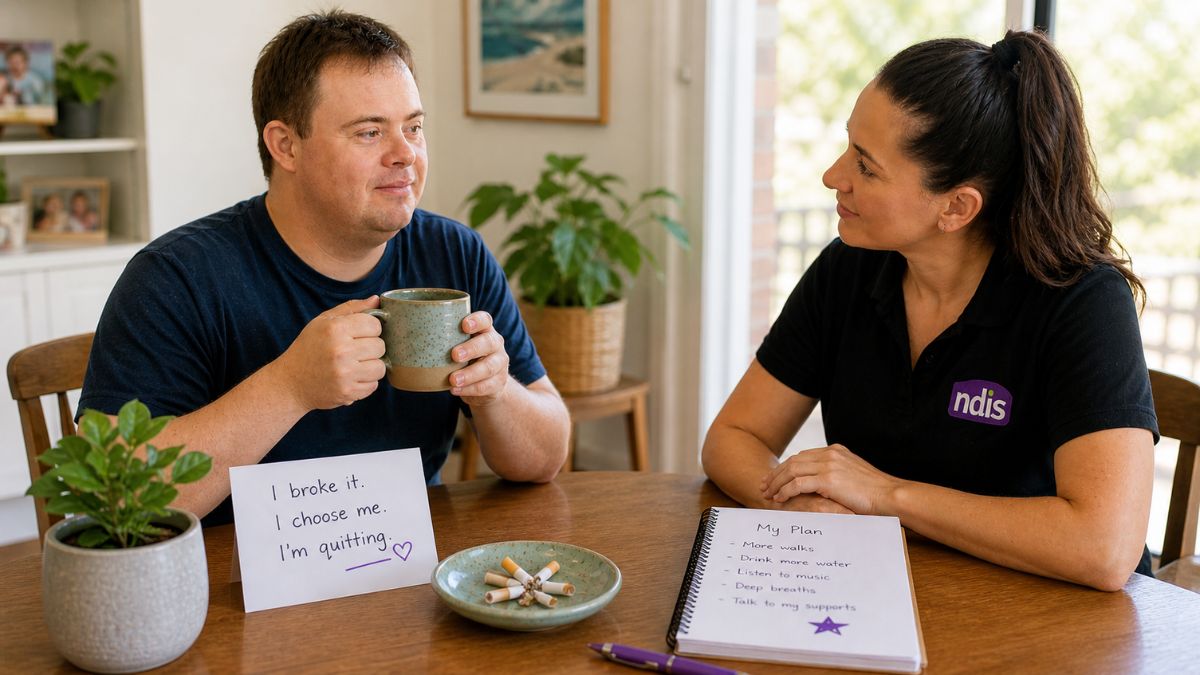
Quitting smoking is the single most powerful choice you can make for your long-term independence — and it starts with one honest conversation about where you are today.
This post opens a 4-part series on lifestyle transformation for NDIS participants across Melbourne and the Mornington Peninsula. Each week builds on the last, giving you practical tools for a healthier, stronger life on your own terms.
Key Takeaways
- Quitting smoking with a disability presents unique challenges, including sensory sensitivities and mobility limitations.
- Start quitting with three accessible steps: talk to your GP about medication options, call the Quitline for tailored support, and identify your trigger patterns.
- Support from services like the SALT Foundation enhances quitting success by providing personalized strategies and accountability.
- NDIS funding can cover support worker time for building healthy routines, even if it doesn’t cover cigarettes or medications directly.
- Quitting smoking is essential for reclaiming your life and deserves a response beyond just willpower.
Table of Contents
The Unique Challenges of Quitting with a Disability
Smoking cessation looks different when your body, mind, or sensory experience shapes how you manage stress.
- Sensory sensitivities can make nicotine replacement products — patches, gums, sprays — feel irritating or overwhelming.
- Mobility limitations restrict access to pharmacies, clinics, and face-to-face quit programs.
- Chronic pain and mental health conditions often link to smoking as a coping mechanism, which makes quitting feel higher-stakes than it does for others.
- Social environments in group homes or shared settings can expose you to second-hand smoke and peer pressure.
Acknowledging the barriers matters. You deserve a quit strategy built for your actual life — not a generic pamphlet.
And here’s what the research shows: disability doesn’t predict failure. Personalised support does predict success.
3 Accessible Steps to Start Quitting Today
You don’t need to quit all at once. You need to start — and these three steps put you in motion immediately.
Step 1: Talk to Your GP About Medication Options
Prescription medications like varenicline (Champix) significantly increase your success rate. Your GP can prescribe through the PBS at low or no cost, and many bulk-bill telehealth services make the consultation itself accessible from home.
Nicotine replacement therapy — patches, lozenges, and inhalers — also works well for many people. Tell your GP about any sensory sensitivities upfront so they can recommend the option your body will tolerate.
Step 2: Call the Quitline
Quitline (13 7848) offers free, confidential phone coaching tailored to your situation. Counsellors adapt their support to disability-related needs — you don’t have to explain yourself from scratch.
You can also reach Quitline through webchat at quit.org.au, which suits participants who find phone calls difficult. The service runs seven days a week, and you can request a scheduled callback so the conversation happens when you’re ready.
Step 3: Identify Your Trigger Pattern
Track when you reach for a cigarette across three days. Morning anxiety? After meals? Social discomfort? Knowing your trigger hands you the power to interrupt it — which is where support workers become invaluable.
Write the time, the feeling, and the context. You’ll see a pattern within 48 hours. That pattern is the map your quit plan needs — specific, personal, and yours.
Why these three steps work together:
Medication addresses the physical withdrawal. Quitline addresses the emotional dimension. Trigger mapping addresses the behavioural habit. Quitting fails most often when people only tackle one of the three — which is exactly why structured support makes the difference.
How the SALT Foundation Supports Your Health Goals
SALT Foundation operates from a simple conviction: every person, regardless of disability, deserves to pursue a life of purpose and flourishing.
That conviction shapes how our support workers show up — not as case managers ticking boxes, but as people genuinely invested in your progress.
Our lifestyle support services across Melbourne and the Mornington Peninsula — including our activity centres at The Well in Heidelberg West and Asha House in Frankston — create the conditions for real, sustained change.
- Support workers help you build and maintain smoke-free routines, from morning structure to managing cravings during activities.
- Activity centre participation replaces smoking’s social function with genuine community connection.
- Goal-setting conversations anchor your quit journey inside your broader NDIS plan — health and wellbeing, capacity building, and daily living all speak to each other.
SALT walks alongside you. We don’t hand you a brochure and wish you luck.
And once you quit smoking, our beginner workout plan will help you rebuild your fitness.
Frequently Asked Questions
NDIS funding doesn’t cover cigarettes, medications, or the Quitline directly. However, your funding can pay for support worker time dedicated to building healthy routines, goal-setting, and community participation — all of which underpin a successful quit attempt. Speak with your plan manager or LAC about how Improved Daily Living or Improved Health and Wellbeing line items could apply.
A SALT support worker provides consistency, accountability, and practical help. They can accompany you to GP appointments, help you track your progress, redirect you during cravings, and celebrate your milestones — the kind of sustained, personal presence no app can replicate.
Yes — in principle. Improved Health and Wellbeing supports fund capacity-building activities that increase your ability to maintain good health. A structured, support-worker-assisted quit smoking plan fits squarely within that intent. Your plan manager can confirm the specific line items in your plan.
Conclusion: Quitting Is the First Step Toward Reclaiming Your Life
Smoking doesn’t just affect your lungs. It shapes your identity, your energy, your relationships, and your sense of what’s possible.
Quitting reclaims all of it — slowly, genuinely, and on your terms.
Many NDIS participants carry the extra weight of having used smoking to manage pain, anxiety, or social isolation for years. That history deserves acknowledgement, not dismissal. And it deserves a response that goes beyond willpower.
The four posts in this May series treat lifestyle transformation as a whole: quitting smoking, setting goals, achieving goals, and changing your identity. Each area connects to the others. Gains compound. The version of yourself on the other side of this process is not hypothetical — you’re building toward it right now.
You don’t have to do it alone. SALT Foundation exists to walk alongside NDIS participants in Melbourne and the Mornington Peninsula who are ready to build something better.
Empower your health journey today. Contact the SALT Foundation to learn how our lifestyle support can help you reach your goals in Melbourne.

Daniel G. Taylor has been writing about the NDIS for six years. His focus has been on mental health and psychosocial disabilities as he lives with bipolar disorder I. He’s been a freelance writer for 32 years and lives across the road from a surf beach. He’s the author of How to Master Bipolar Disorder for Life and a contributor to Mastering Bipolar Disorder (Allen & Unwin) and he’s a mental health speaker. In May 2026, he celebrated 25 years without a major manic or depressive episode.