
Last Updated on 21/07/2026 by Daniel G. Taylor
Estimated reading time: 6 minutes
Disability used to mean broken. Doctors diagnosed it, charities pitied it, and society waited for someone else to fix it.
The social model flips that question entirely. It asks not what’s wrong with a person, but what’s wrong with the world built around them.
Picture a wheelchair user approaching a building with no ramp. Stairs disable her, not her legs. Add a ramp, and the disability vanishes at the threshold.
I’ve spent six years writing about NDIS topics, and I bring lived experience of disability to that work myself. I am not an NDIS participant. I write for participants and their families, across every disability type: physical, sensory, intellectual, and psychosocial alike.
This guide unpacks how disability gets defined today. It traces how the NDIS broadens that definition, and what the shift means for people living with impairment across Melbourne and the Mornington Peninsula, whatever form that impairment takes.
Key Takeaways
- Disability used to mean broken, but the social model shifts the focus to societal barriers instead of personal deficits.
- The NDIS defines disability through functional impact rather than diagnosis, considering various types including physical, sensory, and psychosocial.
- Choice and control are essential for NDIS participants, who dictate their support based on individual needs and goals.
- Disability is diverse; no two individuals experience it identically, highlighting the need for tailored supports and environments.
- Understanding what is disability involves recognizing the interplay between impairment and the environment, which can either enable or disable individuals.
Table of contents
From Medical Model to Social Model
The medical model treated disability as personal deficit: a condition requiring treatment, management, or cure.
The social model rejects that framing outright. It locates disability in the gap between a person’s body or mind and an environment that wasn’t built with them in mind.
Picture two people with identical spinal injuries. One lives in a home with wide doorways, a ramped entry, and an employer who adapts rosters around medical appointments. The other doesn’t — and faces a harder road for no reason connected to her condition.
Same body, different barriers, different outcome. That’s the model in a single sentence.
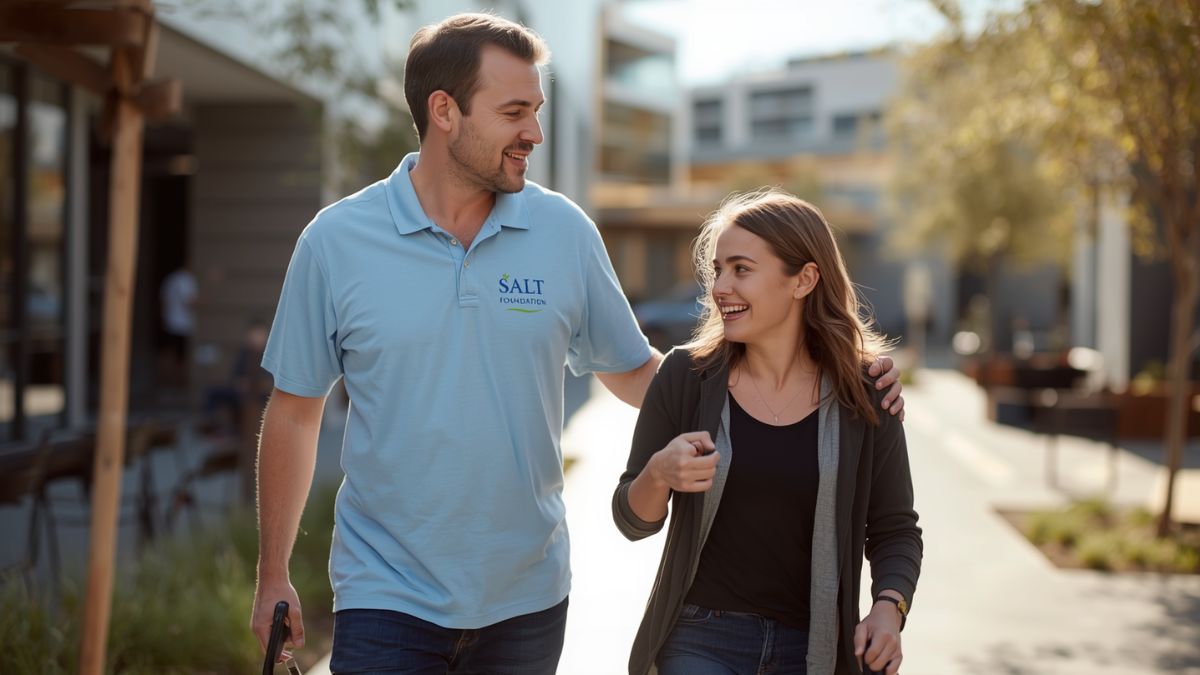
Roger Donnelley, CEO of The SALT Foundation, describes the organisation’s founding philosophy as a choice to “walk alongside people with disability.” SALT removes barriers to independence and community participation so participants can pursue their goals and exercise choice and control.
The NDIS itself stands on this foundation, not on the old medical one.
How the NDIS Defines Disability
Section 24 of the National Disability Insurance Scheme Act 2013 sets the legal test. A person meets the disability requirements when an impairment proves likely permanent, substantially reduces daily capacity, and demands lifelong support.
Crucially, the Act asks for functional impact rather than a specific diagnosis.
This broader test covers a wide range of conditions: physical, sensory (including vision and hearing), intellectual, neurological, and psychosocial. Two people can share an identical diagnosis and experience wildly different levels of disability, because the NDIS measures life impact, not labels.
Each impairment type shapes daily life in its own particular way. The different types of disability recognised under the Scheme show just how varied that lived experience becomes.
Choice, Control, and What Support Actually Looks Like
The NDIS rebuilt disability support around one premise: participants choose, providers deliver. Funding follows the person, never the institution.
Catherine, a SALT Support Worker, says choice and control reaches further than major life decisions. It shapes the everyday moments that build dignity: who supports you, how your day runs, which goals you chase. “Support is built around the participant’s life, values, and ambitions,” she says.
In practice, that might mean a support worker accompanying someone to a TAFE class in Frankston. It might mean home modifications for a family in Heidelberg West, or an occupational therapist helping someone navigate a new wheelchair-accessible kitchen.
Harriet Dixon, SALT Support Coordinator, has watched the pattern repeat: anxiety eases, confidence builds, and routines that once felt impossible become stable. “People don’t just receive care,” she says. “They flourish.”
Get the environment right, and capability follows close behind. Get it wrong, and even the most resilient person collides with barriers nobody built on purpose but nobody removed either.
Disability Is Diverse, Not Uniform
According to the Australian Institute of Health and Welfare, 4.4 million Australians live with disability — 18 per cent of the population. That figure spans everything from visible mobility impairments to psychosocial conditions most people never notice.
No two people inhabit a diagnosis identically. The diversity within the disability community reflects different ages, cultures, support needs, and entirely different relationships to the same underlying condition.
Generalising about “what disability looks like” misses the social model’s whole point before the conversation even starts.
Action Steps
- Reflect on which disability categories, physical, sensory, intellectual, neurological, or psychosocial, apply to you or someone you support.
- Audit one environment in your life, home, work, or community, for a barrier a ramp, a roster change, or a routine adjustment could remove.
- Review the NDIS eligibility criteria against your own circumstances, focusing on functional impact rather than diagnosis alone.
- Enquire with The SALT Foundation about support options across Melbourne and the Mornington Peninsula.
- Talk with someone you know who has a disability about their experience, then listen more than you speak.
Frequently Asked Questions
The NDIS defines disability through functional impact, not diagnosis alone. An impairment must prove likely permanent, substantially reduce capacity for daily activities, and require lifelong support.
The social model holds that disability arises from the interaction between impairment and an inaccessible environment, never from the impairment alone. Remove the barrier, and the disability often shrinks with it.
The NDIS covers physical, sensory, intellectual, neurological, and psychosocial disability, assessed by functional impact rather than diagnosis alone.
Carers don’t receive their own NDIS plan. A participant’s plan can fund supports that ease the load on family, though, including respite, home modifications, and skill-building for independence.
SALT provides support coordination, core supports, and capacity building across all major disability types, delivered from The Well in Heidelberg West and Asha House in Frankston.
Conclusion: A Definition Built Around People, Not Limitations
Disability isn’t a fixed category, diagnosed once and filed away. It moves with the environment surrounding it.
Remove the barrier, and capability often follows. That single shift, from fixing the person to fixing the world, underpins everything the NDIS sets out to do.
Enquire with The SALT Foundation today to discuss support tailored to your circumstances, wherever you sit within that broad and varied definition.
Related Reading
- Understanding the Different Types of Disability
- The Characteristics and Diversity of Disability
- What Is Psychosocial Disability?
- How to Get NDIS Funding
- Unveiling the Mystery: What’s Really Going On with Blind People’s Eyes?

Daniel G. Taylor has been writing about the NDIS for six years. His focus has been on mental health and psychosocial disabilities as he lives with bipolar I disorder. He’s been a freelance writer for 32 years and lives across the road from a surf beach. He’s the author of How to Master Bipolar Disorder for Life and a contributor to Mastering Bipolar Disorder (Allen & Unwin) and he’s a mental health speaker. In May 2026, he celebrated 25 years without a major manic or depressive episode.