
Last Updated on 23/09/2026 by Daniel G. Taylor
Your NDIS plan holds a number. That number rarely arrives in one lump sum anymore. Instead, the NDIA releases it in stages called funding periods, and since May 2025, those stages have reshaped how participants across Melbourne and the Mornington Peninsula budget, plan, and spend.
The funding period system is no longer news. It’s the norm. Most new and reassessed plans now run on three-month cycles rather than the old twelve-month release. And this year brings a second wave of change: new NDIS laws passed Parliament on 19 August 2026, and several of their provisions touch funding periods directly. Some start within weeks. Others land in October, December, and into 2027.
This guide walks through both layers. First, how your NDIS funding period actually works. Second, what the 2026 reforms mean for the money sitting in your plan right now.
What Is an NDIS Funding Period?
A funding period is a window of time during which part of your NDIS budget becomes available. Picture your annual plan sliced into instalments rather than handed over whole. Most participants now receive their funding quarterly, though some support categories run monthly, and a smaller number still operate annually.
The total amount in your plan hasn’t shrunk. Only the timing changed. This distinction trips people up constantly, so it bears repeating: a funding period governs when you can spend, never how much you’re ultimately entitled to.
The legal foundation runs deeper than most participants realise. Section 33 amendments to the NDIS Act gave the NDIA authority to group supports into components and release them on a schedule, starting with twelve-month periods from October 2024, then tightening to the current three-month standard from 19 May 2025.
Who’s Working Under the New Schedule Now?
Fifteen months on from the initial rollout, the funding period system now touches:
- Every new NDIS participant approved since 19 May 2025
- Every participant who has passed a plan reassessment since that date
- Anyone entering a fresh plan review from this point forward
If your plan hasn’t been reassessed since before mid-2025, you may still sit on the older twelve-month structure. That won’t last. Your next review will move you across, and no warning beyond the standard reassessment process will arrive first.
How the Funding Period Schedule Actually Works
Your NDIS planner sets your schedule based on your goals, your history, and the shape of your supports. Four options exist:
- Monthly: 12 funding periods a year
- Quarterly: 4 funding periods a year, and the most common by far
- Semi-annually: 2 funding periods a year
- Annually: 1 funding period a year
Here’s the twist most explainer articles skip: different categories within a single plan can run on different clocks simultaneously.
An Example Plan, Broken Down
Take a twelve-month plan starting in a given month:
- Core Supports: $80,000 released across 4 quarterly periods
- Home and Living: $120,000 released across 12 monthly periods
- Improved Daily Living: $30,000 released as 1 annual period
In month one, the participant receives $20,000 for Core Supports, $10,000 for Home and Living, and the full $30,000 for Improved Daily Living. By month two, only the $10,000 Home and Living instalment lands, because the other two categories sit on longer cycles. Three separate clocks, one plan.
Why the NDIA Built It This Way
Feedback drove the redesign, not bureaucratic preference. Participants, families, providers, and financial counsellors flagged the same recurring problems under the old twelve-month lump sum: early overspending, patchy access to support later in the plan, and genuine financial stress for people managing complex budgets.
Shorter, structured periods aim to fix four things at once. Budgeting habits improve when funds arrive in manageable chunks. Service delivery smooths out across the year rather than clustering early. Financial stress eases. And participants at risk of exploitation gain a layer of protection, since nobody can drain a year’s funding in a fortnight.
The pattern shows up early, according to Harriet Dixon, a Psychosocial Recovery Coach at The SALT Foundation. “The biggest mistake is treating each three-month period like a fresh budget and using too much funding early on,” she says. “We help participants look at the whole plan, pace their supports and leave some flexibility for when things change — because with psychosocial disability, needs don’t always follow a calendar.”
What Happens to Unused Funds?
Money left over rolls forward, but only within the boundaries of the current plan and the current schedule:
- Unused funds carry into your next funding period, provided both periods sit inside the same plan
- Unused funds do not carry into a new plan once your current one expires
- From 1 February 2027, plan renewals under the incoming NDIS framework will make this rule sharper still, formally cutting the link between a closed plan and whatever funding sat unspent inside it
Spend deliberately. A funding period rewards steady use, not stockpiling.
Changes to NDIS Funding Periods You’ll Feel This Year
The National Disability Insurance Scheme Amendment (Securing the NDIS for Future Generations) Bill 2026 passed both Houses on 19 August 2026. The NDIA has confirmed participants keep using their current plans and supports as usual while the reforms phase in, but four dates matter for anyone tracking their own funding period.
27 August 2026, plan reassessment requests tighten. Only a participant, their nominee, or their child representative can now request a reassessment, and the request must arrive on the correct form with supporting evidence, often from a GP or health professional. The NDIA then has 90 days to decide whether to reassess, vary, or decline. If a shifting funding period schedule is your reason for requesting a reassessment, budget for that 90-day wait.
1 October 2026, social and community participation budgets start resetting. The Minister gains power to reduce funding for specified support groups, and social, civic, and capacity-building categories are first in line as plans come up for reassessment. Watch these categories closely if they sit inside your current funding period.
1 December 2026, the claim window shrinks to 90 days. Providers currently have up to two years to submit a claim against your plan. From this date, that drops to 90 days from the date a support was delivered. A provider who delays billing risks losing the claim entirely, which matters because a lost claim can eat into the funding period it was meant to draw from.
1 February 2027, plan renewals replace continuations. Unspent funding stops following you between plans under the new renewal system, reinforcing the rollover rule above with legislative teeth.
Greg Smith, COO of The SALT Foundation, says the claim-window change won’t catch the organisation off guard. “At SALT, weekly billing is our normal practice, so we’re already keeping a close eye on budgets and service use rather than waiting until the end of a funding period,” he says. “As the December 2026 claim changes approach, participants can expect us to monitor things closely, flag any concerns early and work with them to address issues before they become a bigger problem.”
Special Considerations for Different Support Types
Not every support fits neatly into equal quarterly slices.
Large Upfront Costs
Assistive technology and home modifications often demand one substantial payment rather than four even ones. The NDIA can front-load your initial funding period to cover these costs, so raise big-ticket items early in your planning meeting rather than assuming a standard split will cover them.
Regular High-Cost Supports
Supported Independent Living and other ongoing, high-cost supports typically run on monthly funding periods. Matching the schedule to the delivery pattern keeps cash flow steady for both you and your provider.
What Determines Your Funding Period Schedule
Several factors shape the NDIA’s decision on your particular schedule:
- Your own budgeting preferences and track record
- Past patterns of fund usage, appropriate or otherwise
- Risk factors, including potential financial exploitation
- The complexity of your support mix
- Your capacity, or your nominee’s capacity, to self-manage
- Whether a plan manager or support coordinator sits alongside you
How to Track and Manage Your Budget
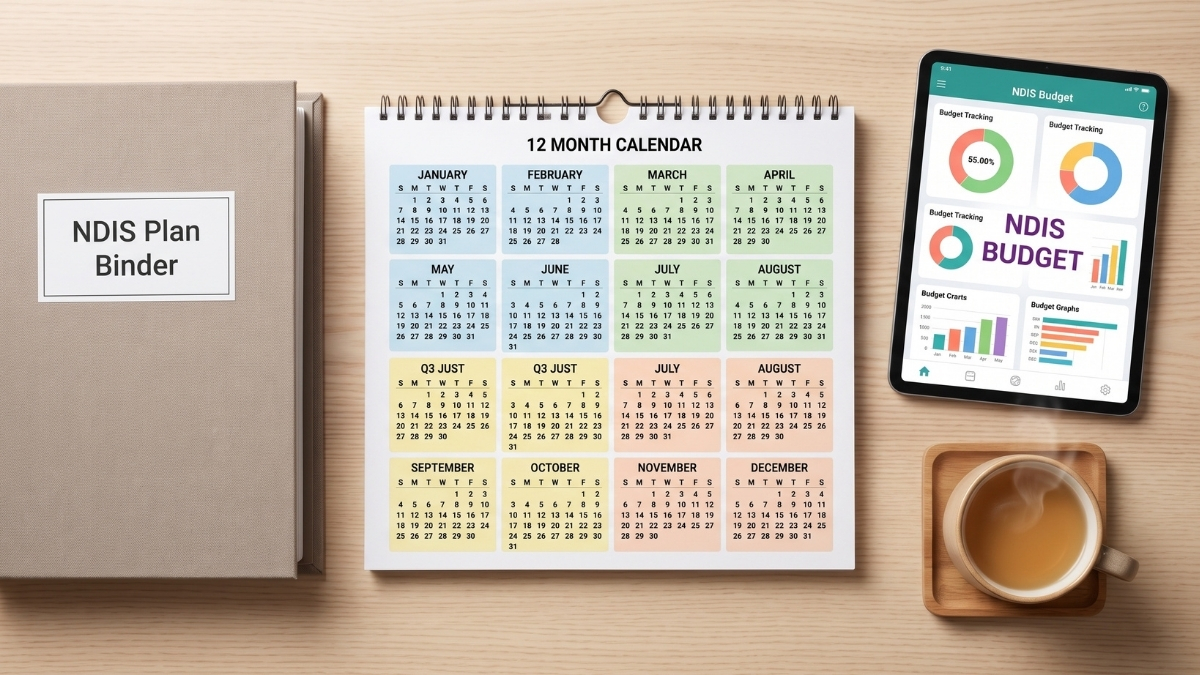
Real-time visibility matters more under a funding period system than it ever did under the old lump sum. The NDIA’s participant portal and my NDIS app let you check your balance, see upcoming period start dates, and confirm what’s already been claimed. The NDIS support budgets page breaks down exactly how each category in your plan is structured.
Check these tools weekly, not just when something feels wrong.
What to Do If You Run Out of Funds Early
Exhaust a funding period before its end date, and access simply pauses until the next one opens. If that happens:
- Contact your plan manager or support coordinator without delay
- Raise your situation directly with the NDIA
- Review what drove the overspend, and whether it’s likely to repeat
- Lodge a plan reassessment request only if your circumstances have genuinely shifted, and expect the correct form, supporting evidence, and a 90-day decision window under the rules that took effect 27 August 2026
How to Prepare for What’s Ahead
If you’re approaching a review, or new to the NDIS, a handful of steps will keep you ahead of the changes:
- Ask your support coordinator how the current reforms will land on your specific plan and funding period schedule
- Audit your last two quarters of spending to spot whether a different funding period length would suit you better
- Set up the my NDIS app if you haven’t already, and check it weekly rather than monthly
- Get clear on what your funding can and cannot cover before you commit to a service agreement
- Build a support schedule that matches your funding period cadence, not the other way around
- If you rely on social or community participation supports, ask now how the October 2026 budget resets might touch your category
Roger Donnelley, CEO of The SALT Foundation, frames the broader reform response the same way. “For us, preparing for NDIS reform isn’t just about keeping up with changes to funding rules,” he says. “It’s about making sure our participants and families feel informed, supported and confident as things evolve. We’re strengthening our internal systems, keeping our teams across the changes and focusing on clearer communication, so participants aren’t left trying to navigate reform on their own.”
How SALT Foundation Can Help
You don’t have to track any of this alone. Our team at The SALT Foundation works alongside participants across Heidelberg West, Frankston, and the wider Mornington Peninsula to:
- Explain your funding period schedule in plain language, category by category
- Help you get the most from your Core Supports, Home and Living, and Improved Daily Living funding
- Work alongside you, your family, and your plan manager so your plan actually fits your life
- Track the 2026 reforms on your behalf and flag anything that touches your specific plan
- Connect you with our support coordination team when a funding period issue calls for hands-on help
Confidence with your NDIS funding period isn’t a luxury. It’s the difference between a plan that works for twelve months and one that runs dry in nine.
Action Steps
- Check your NDIS plan document today to confirm your current funding period length for each support category
- Book time with your support coordinator to walk through how the October 2026 and February 2027 changes might affect you specifically
- Set a recurring weekly reminder to check your balance through the my NDIS app
- If you’re considering a plan reassessment, gather your supporting evidence now, given the new 90-day decision window
- Flag any social or community participation supports in your plan for extra attention as October 2026 approaches
Frequently Asked Questions
Will my total NDIS funding amount change because of funding periods?
No. Your total plan funding stays exactly as approved. A funding period only governs the timing of access, never the total.
Who is eligible for NDIS funding, and does that change under the new funding period rules?
Eligibility criteria haven’t shifted. You still need a permanent, significant disability, and to meet the standard age and residency requirements. Read our full eligibility roadmap if you’re applying for the first time. Funding periods only apply once you already hold an approved plan.
What is funded by NDIS, and does that differ across funding periods?
The NDIS funds reasonable and necessary supports tied to your disability, split across Core, Capacity Building, and Capital categories. Which category a support sits in determines its funding period length, not the other way around.
How is NDIS funding allocated across a plan with multiple funding periods?
Your planner allocates a total to each support category first, then attaches a release schedule, monthly, quarterly, semi-annual, or annual, based on your needs and the factors outlined earlier in this guide. Different categories can and often do run on different schedules within the same plan.
Can I still claim for services delivered in an earlier funding period?
Yes, provided the claim window hasn’t closed. That window is shrinking. From 1 December 2026, providers must lodge claims within 90 days of delivering a support, down from the current two years.
What if my support needs change during my plan?
You, your nominee, or your child representative can request a plan reassessment. Since 27 August 2026, that request needs the correct form and supporting evidence, and the NDIA has up to 90 days to decide whether to reassess, vary, or decline.
Will the 2026 NDIS reforms change my funding period specifically?
Possibly, depending on your support mix. Social and community participation budgets begin resetting from 1 October 2026, and plan renewals from 1 February 2027 will tighten the rules around unspent funding between plans. Core funding period mechanics, quarterly release, rollover within a plan, stay unchanged for now.
Conclusion: A Settled System Facing Fresh Change
The NDIS funding period has moved from disruption to routine. Most participants now budget in quarters, not years, and the panic that met the May 2025 rollout has largely faded. What hasn’t faded is the pace of reform. Between now and February 2027, four separate changes will touch how your funding period behaves, who can request a reassessment, and what happens to money you don’t spend.
Understanding the mechanics protects you from the changes still landing. Preparing for them protects your plan.
Related Reading
- NDIS Meaning Explained: What You Need to Know
- How to Get NDIS Funding: Your 5-Step Roadmap
- What Can Improved Daily Living Funding Be Used For?

Daniel G. Taylor has been writing about the NDIS for six years. His focus has been on mental health and psychosocial disabilities as he lives with bipolar I disorder. He’s been a freelance writer for 32 years and lives across the road from a surf beach. He’s the author of How to Master Bipolar Disorder for Life and a contributor to Mastering Bipolar Disorder (Allen & Unwin) and he’s a mental health speaker. In May 2026, he celebrated 25 years without a major manic or depressive episode.