

Last Updated on 25/06/2026 by Daniel G. Taylor
Estimated reading time: 7 minutes
For many carers, that stretch of unstructured time brings more dread than delight. Planning a getaway with a participant in tow can feel like solving a puzzle with half the pieces missing.
It doesn’t have to. A little proactive groundwork turns a stressful scramble into a genuine break for the whole family.
This guide walks you through accessible family holidays in Victoria. You’ll learn how to find the right accommodation, and you’ll learn exactly what the NDIS will and won’t pay for.
Key Takeaways
- Plan accessible family holidays in Victoria with proactive groundwork and clear communication with accommodation providers.
- The NDIS does not fund family holidays but can cover support worker travel under Core Supports for outings.
- Scout locations beforehand to reduce stress and ensure accessibility for all family members during the trip.
- Contact local councils and Visitor Information Centres for reliable information on accessible activities.
- Use SALT resources and support services to navigate planning and prevent carer burnout during family outings.
Table of Contents
Finding Disability Friendly Accommodation in Victoria
Pick up the phone before you fill out a booking form. Property managers want your business, and many will arrange a temporary ramp or a shower chair to secure it, but only if you ask directly.
Generic accessibility filters on booking sites miss enormous amounts of nuance. A “wheelchair accessible” listing might mean a doorway that’s two centimetres too narrow, or a bathroom rail bolted to a wall that can’t bear real weight.
Specifics matter. Describe your participant’s exact needs on the phone, not a category from a dropdown menu.
Council websites and Visitor Information Centres across the Mornington Peninsula often hold knowledge that never makes it onto a national booking platform. Ring them.
Ask which local operators have hosted guests with mobility, sensory, or communication needs before. Ask what worked, and ask what didn’t.
AI tools can speed up the groundwork, too. Feed a chatbot your participant’s specific requirements, and ask it to shortlist accommodation in Melbourne or along the Peninsula that matches.
Treat the output as a starting list. Verify every claim with a phone call before you trust it.
Accessible Family Holidays Victoria: What to Ask a Property Manager
Ask plainly. Can a portable ramp cover the front step?
Does the bathroom have grab rails, and can one be added before check-in? Is there a quiet, low-stimulus room available if your participant needs a break from shared spaces?
Direct questions get direct answers. Direct answers get you a property that actually works.
The NDIS Reality Check: Funding Your Holiday Support
Here’s the line carers need tattooed on the inside of their planning folder: the NDIS does not fund a holiday. Flights, accommodation, meals, and entry tickets all sit outside the scheme, full stop.
That rule catches plenty of families off guard. Holiday packages marketed as “NDIS-friendly” sometimes blur this line, so read the fine print before you assume a discount covers a funding gap.
Core Supports tell a different story. Funding under this category can pay for a support worker to travel with your participant. The NDIS confirms support worker travel can be claimed under Core Supports, provided the support is agreed with your participant in advance.
That means the assistance which keeps daily life safe and accessible at home can also keep a beach day in Sorrento safe and accessible. The support doesn’t disappear because the postcode changed.
That distinction changes the maths on every trip. A family might still cover the cabin at a caravan park themselves, but bring along the one-on-one support that makes the difference between a holiday and a crisis.
“Day trips are a great way to experience something new and try out a location or activity before committing to a multiday holiday,” says Greg Smith, COO of The SALT Foundation.
“We regularly organise day excursions for participants,” he continues. “This week a group from across Melbourne had an excellent adventure on the Puffing Billy steam train in Belgrave.”
Talk to your Support Coordinator before you book anything. They can confirm exactly how much Core Supports capacity sits available for travel dates, and they can flag it early enough to avoid a funding surprise mid-trip.
Unsure what falls under that budget? See SALT’s guide to NDIS Core Supports for a breakdown of what the category can and can’t cover and what we can help you with.
And make sure you’ve used our guide to claim any carers payments — they’re their to help you.
Reducing Stress with Pre-Visits and Local Knowledge
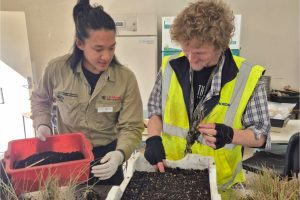
Scout the location before the whole family arrives. A pre-visit, even a short one, lets you walk the actual paths and test the actual bathroom.
You’ll clock the actual noise level of a venue, too, without your participant present for the discovery process. Surprises belong in birthday parties, not in accessible bathrooms.
Stress drops the moment uncertainty leaves the room. You already know where the accessible parking sits, where the quiet corner is, and how far the walk to the water really stretches.
The day itself runs on calm rather than improvisation. That’s the entire point of scouting ahead.
Melbourne offers no shortage of scoutable day trips. The Royal Botanic Gardens, accessible piers along the bay, sensory-friendly sessions at major attractions: all of it rewards a quiet look beforehand.
The Mornington Peninsula adds beaches with all-terrain matting, low-key townships, and wineries that have invested seriously in step-free access. Mornington Peninsula Shire lists the beaches with matting and all-terrain wheelchairs available, which is worth checking before you commit to a stretch of sand.
A morning’s drive can deliver an entire holiday’s worth of options.
Carer burnout doesn’t announce itself, but it builds with every unplanned obstacle. Reducing the unknowns on a family trip protects more than the day out; it protects the person doing the planning.
If that burnout already feels familiar, SALT’s guide on becoming a carer for a family member covers the self-care and respite options carers often overlook.
Frequently Asked Questions
No. The NDIS won’t cover accommodation, flights, or meals for a family holiday. Core Supports can, however, fund a support worker to travel with your participant.
Start with council websites and Visitor Information Centres, since local staff often know which venues genuinely deliver on accessibility claims. Cross-check with a pre-visit wherever possible.
Yes, provided the support sits within your participant’s existing Core Supports plan. Speak with your Support Coordinator to confirm available hours before the date locks in.
Ring ahead and ask specific questions rather than trusting a generic icon on a website. A five-minute call prevents a wasted afternoon.
For most families, yes. The time spent scouting a location pays for itself in a calmer, more predictable day when the whole family arrives.
Conclusion: A Holiday Worth Planning For
A holiday with a participant in the family doesn’t need to mean a holiday without rest. Call ahead, understand your funding lines, and scout before you commit, and the school holidays shift from looming threat to genuine break. SALT families already carry enough weight; let the planning carry less of it.
Action Steps
- Call your shortlisted accommodation directly and ask about ramps, rails, and quiet spaces before booking.
- Confirm available Core Supports hours with your Support Coordinator for the dates you’re planning to travel.
- Check council and Visitor Information Centre websites for accessible activities across Melbourne and the Mornington Peninsula.
- Schedule a pre-visit to your chosen day-trip location, even a brief one, before the full family arrives.
- Contact the SALT Foundation to arrange support worker coverage for the upcoming school holidays.

Daniel G. Taylor has been writing about the NDIS for six years. His focus has been on mental health and psychosocial disabilities as he lives with bipolar I disorder. He’s been a freelance writer for 32 years and lives across the road from a surf beach. He’s the author of How to Master Bipolar Disorder for Life and a contributor to Mastering Bipolar Disorder (Allen & Unwin) and he’s a mental health speaker. In May 2026, he celebrated 25 years without a major manic or depressive episode.