
Last Updated on 17/09/2026 by Daniel G. Taylor
Estimated reading time: 6 minutes
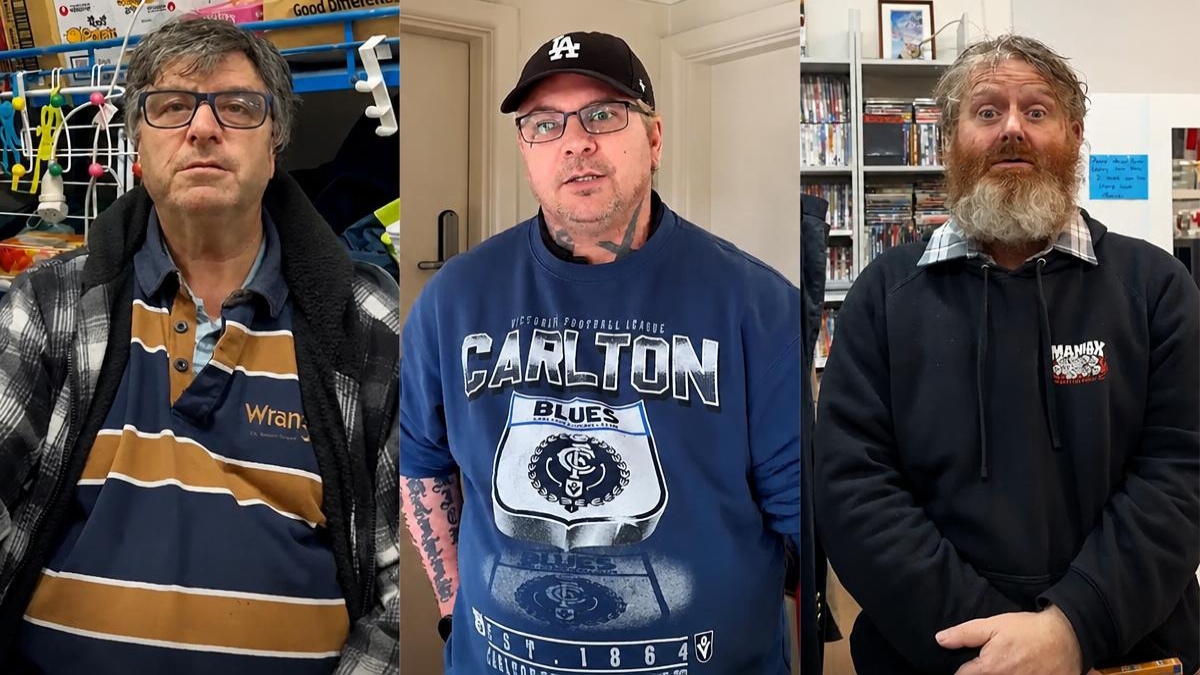
Numbers tell you what the NDIS achieves. Voices tell you what it feels like. A funding category explains support hours; a person explains what those hours brought back — a walk to the letterbox, a Saturday out, a conversation that flows instead of stalling. These real-life NDIS success stories come from three SALT Foundation participants who sat down with our team and told us, in their own words, what changed when the right support arrived. Their stories carry the weight that statistics can’t.
We didn’t script these conversations. We asked simple, direct questions — how’s life with SALT, what’s changed, how does your support worker help — and let Tony, Ceejay and Dale answer in their own language. That rawness matters. Polished marketing copy can describe an NDIS plan; only a participant can describe what it’s like to live inside one. Watch the videos below, then read on for the parts that stayed with us long after the cameras stopped rolling.
Key Takeaways
- Participants share powerful stories of how SALT Foundation support transformed their lives, highlighting respect and relationship over mere funding.
- Tony appreciates the support team for listening and respecting him and his wife, reflecting a focus on community well-being.
- Ceejay credits SALT with helping him regain independence after a challenging past, demonstrating the importance of tailored support.
- Dale finds value in everyday conversations and activities, representing a more subtle success in improving life quality.
- These narratives underscore a common theme: the importance of human connection in NDIS support, reminding us that real voices drive real change.
Tony’s Story: “They Listen to You”
Life had grown harder for Tony before SALT arrived, and he says as much without dressing it up. What changed wasn’t a service on paper — it was a team that showed up for him and his wife, Kim, together.
“It was a little bit harder for me personally, then SALT came along and they provided a lot of support, which helped me and my wife, Kim,” Tony says. “I’m so glad that I’m on board with the SALT team.”
Ask him what sets the team apart, and Tony skips the jargon. “They’re great people. They listen to you. They teach you and they respect you. And that’s one of the major things is respect these days. I couldn’t speak any highly about the SALT Foundation.”
That word — respect — comes up again and again in participant conversations. It’s the difference between a support worker who ticks boxes and one who builds a relationship. Tony frames his experience as a shared one — his and Kim’s — a reminder that when support lands well, it doesn’t stop at the participant. It steadies the whole household around them.
Ceejay’s Story: “I Wouldn’t Be Able to Go to the Letterbox by Myself”
Ceejay grew up in boys’ homes and, later, in jail. He describes life before SALT as hectic, unstable, without a floor beneath it. SALT reached out roughly twelve months before his release, connecting him with the NDIS while he was still inside. Six years on, he’s still with the Foundation.
“Without them, I wouldn’t be able to do a lot of things on my first day out of jail,” Ceejay says. “I wouldn’t be able to go to the letterbox by myself. I needed support work around the clock.”
That early, intensive support — seven days a week, eight hours a day — has tapered as Ceejay’s independence has grown. He’s now down to six hours across three days. “I’m slowly getting there,” he says. “Long way to go, but always there.”
Ceejay lives with anxiety, schizophrenia and ADHD, and he’s candid about how those conditions shape daily life without a support worker beside him. It’s a reminder that psychosocial disability sits alongside physical and intellectual disability as a genuine, fundable NDIS category — not a lesser one.
“Having a support worker helps me in a lot of ways, like going shopping, going out in the community, doing functions,” he says. “Without a support worker, I wouldn’t do that. I would stay home.” That shift — from staying home to showing up — is exactly what community participation funding exists to build.
Ceejay’s wife also features in his story, though in a different way to Tony’s. She’s caring for young children and can’t always be his support; the NDIS fills that gap, not as a replacement for family, but as the structure that lets his family function. It’s a distinction worth sitting with: support work doesn’t compete with the people who love you. It carries the load they physically can’t.
Dale’s Story: “The People Are Great”
Dale’s relationship with SALT runs two to three years deep, and his days now revolve around books, music and entertainment. Asked what’s changed, he points first to something simple and often overlooked: conversation.
“Being with SALT is good,” Dale says. “I do all the books, and the music, and the entertainment.
“It’s made me more communicative,” he adds. “You talk to people and that.”
And the people themselves? “The people are great, and they’re supportive and understanding.”
Three sentences, no embellishment — and they say more about SALT’s culture than a page of marketing copy ever could. Dale’s story is the quietest of the three, and that’s precisely its value. Not every success looks like a dramatic turnaround. Sometimes it looks like a Tuesday spent with books and music, surrounded by people who feel like friends rather than staff.
What These Real-Life NDIS Success Stories Have in Common
Strip away the specifics — the letterbox, the books, the shared history with Kim — and a pattern emerges. Each participant names the same thing before anything else: the people. Not the funding category, not the service model. The relationship.
That pattern holds nationally, too. The NDIS’s own October 2025 outcomes report recorded a 42 per cent relative improvement in life satisfaction among participants aged fifteen and over since joining the Scheme. Tony, Ceejay and Dale put a face to that percentage.
Notice, too, what none of them lead with: the funding line items, the plan categories, the paperwork. Those things matter — they’re the mechanism — but they’re not what a participant remembers a year later. What they remember is whether someone listened, whether someone showed up, whether the support flexed as their life changed. SALT builds its model around that ordering on purpose.
Action Steps: Starting Your Own SALT Story
- Reach out to our team for an obligation-free conversation about your NDIS plan and goals.
- Visit The Well in Heidelberg West or Asha House in Frankston to meet the people you’d be working with.
- Ask us how a support plan can flex over time, the way Ceejay’s has, as your independence grows.
Frequently Asked Questions
Every participant’s journey looks different, shaped by their goals, their disability and their support needs. Tony, Ceejay and Dale share their own experiences, not a guarantee of identical results for every participant.
Yes. SALT supports participants across physical, intellectual and psychosocial disabilities, including anxiety, schizophrenia and ADHD.
Speak with your support coordinator or contact our team directly — we’re always glad to hear how support has made a difference.
Conclusion: Real Voices, Real Change
Tony, Ceejay and Dale didn’t set out to sell anything. They answered a few honest questions about their lives, and their honesty is what lands. Respect. Independence, rebuilt one letterbox trip at a time. Conversation, where there was once silence. If their stories sound like something you want for yourself or someone you love, that conversation starts with a single call to our team.
Related Reading
- What Is a Support Worker NDIS?
- What Is Psychosocial Disability: Overcoming Barriers
- NDIS Goal Setting: Building a Life Beyond the Plan
- Innovative Community Participation NDIS: 5 Fresh Ideas

Daniel G. Taylor has been writing about the NDIS for six years. His focus has been on mental health and psychosocial disabilities as he lives with bipolar I disorder. He’s been a freelance writer for 32 years and lives across the road from a surf beach. He’s the author of How to Master Bipolar Disorder for Life and a contributor to Mastering Bipolar Disorder (Allen & Unwin) and he’s a mental health speaker. In May 2026, he celebrated 25 years without a major manic or depressive episode.